



AI can give you an answer in seconds. That feels like progress, and it is. But something else is happening at the same time.
As answers become instant, thinking starts to feel optional. Meanwhile, the world around us is growing more complex, less predictable, and more demanding.
That shift has real consequences.
The easier it becomes to get answers, the less we practice questioning them, connecting ideas, and forming our own conclusions. Over time, that changes not just how we think, but the value we bring to our work and the world.
Today, value isn’t created only by what we produce. Increasingly, it comes from how we think.
The Rise of the Brain Economy - How Human Thinking Shapes Growth Amid AI
Most conversations about AI focus on tools and capabilities. But the bigger change is happening underneath the surface.
As AI takes over routine tasks and makes information instantly accessible, the real advantage shifts. It moves to the ability to interpret, make decisions, connect ideas, and navigate situations when there is no clear path.
This is what sits at the core of the brain economy.
A brain economy puts the brain at the center of the economy. It designs the economy, society, and organizations with the brain in mind. And that is super important now that we are changing the whole architecture of how we work, with agents, robots, and super AI.
Source: McKinsey
In a brain economy, growth depends on human capability. Not just what we produce, but how we think, learn, and adapt. Stronger thinking leads to better decisions, better collaboration, and more resilient systems.
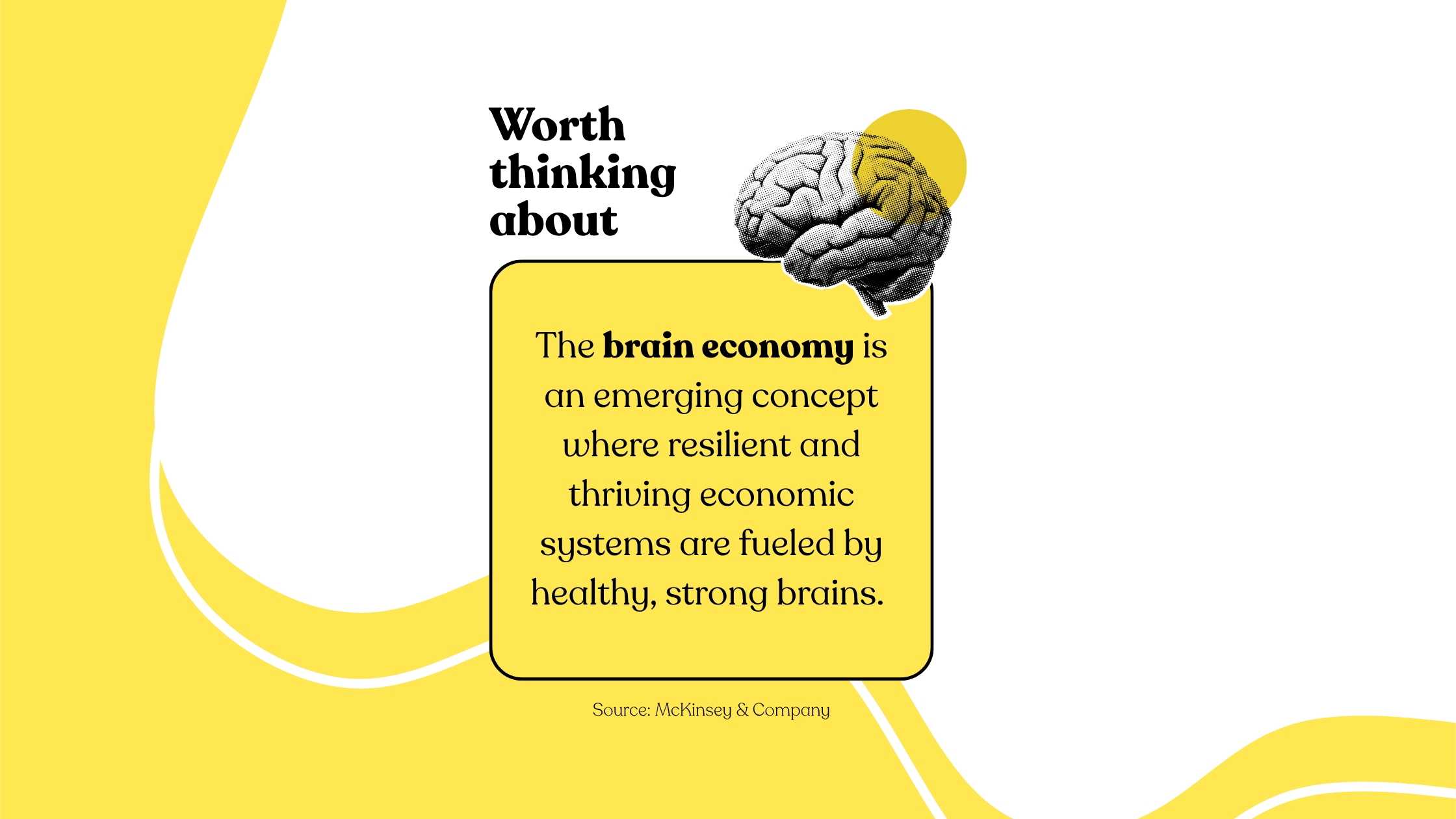
The quality of thinking is no longer just a personal trait. It becomes an economic factor.
Brain capital captures that idea at the individual level.
What is brain capital?
Brain capital brings together two things: brain health and brain skills.
Brain health is about how well your brain functions. Your ability to focus, manage stress, stay mentally flexible, and handle complexity in everyday situations.
On top of that, there are brain skills. These are abilities you develop over time, such as:
- critical thinking
- learning
- communication
- adaptability
- decision-making
Together, they shape how you approach problems, how you respond to change, and how you create value over time.
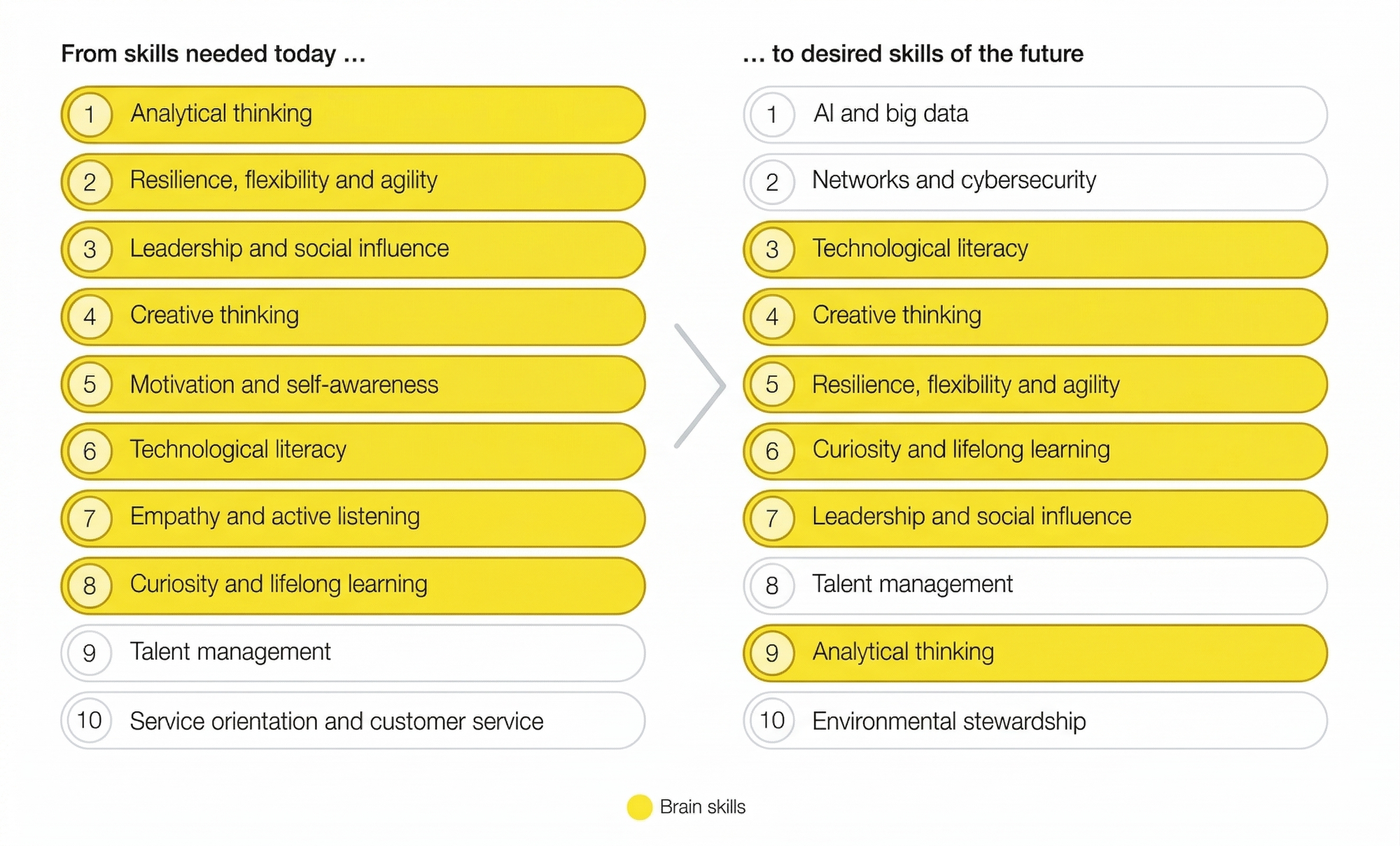
AI made answers cheap, but human thinking still takes effort
AI changed the cost of getting answers.
Any question can now receive an instant, plausible answer. The temptation is to accept it at face value rather than interrogate it. But what’s lost is discovery.
When you rush to answers, you lose something important - thinking.
Discovery is where you:
- connect ideas
- notice patterns
- build your own understanding
That process strengthens your brain.
If you skip it too often, your thinking becomes more passive. You rely on outputs instead of building your own perspective.
Before AI, thinking was part of the process. You had to search, compare, and question. Now you can skip that.
If you think back, you’ve probably experienced this yourself. You were trying to understand something, jumping between sources, piecing things together. It took effort. And then at some point, it clicked.
That moment felt different because you didn’t just get the answer. You actually figured it out yourself.
That effort is the mechanism that builds your thinking.
And that’s exactly where brain capital either grows or starts to erode.
Information is easier to access than ever. Content can be generated in seconds. But understanding still requires effort. What matters now is how you engage with what you see.
Your ability to question, test ideas, connect information, and decide what actually matters becomes more important. And that’s the point where human judgment makes the difference.
Stronger individual thinking leads to better decisions in teams. Better decisions improve how organizations operate. At scale, that shapes how economies grow and adapt.
Avoiding The Brain-Erosion Effect
Relying too much on ready-made answers does not feel like a problem in the moment. It saves time and reduces effort. But over time, it can make thinking more passive.
If you want to avoid that slow erosion of thinking, you need to stay active in the process.
It’s not enough to read an answer and move on. You need to build your own understanding.
That usually means taking a bit more time to:
- look for information across different sources
- stay curious, even when you already have an answer
- connect ideas in your own way
You do not need to avoid AI. But you do need to keep your thinking active at every step.
Let it build on what you already know, adding perspective and insight while you stay in control of the process.
When you guide the questions and connect ideas yourself, the results become deeper and more meaningful.
Using AI as a Thinking Partner, Not a Shortcut
A more useful way to approach AI is to treat it as a thinking partner rather than a shortcut.
Start from your own context:
- what you’ve read
- what you’ve saved
- what you’ve already thought about
Then use AI to:
- explore ideas further
- challenge your assumptions
- connect concepts in new ways
That way, the answer is not just generic. It’s grounded in your context. And more importantly, you stay involved in the thinking.
How Brain Capital Grows - The Five Levers of Strengthening Thinking
Brain capital develops gradually, through how you live, work, and make decisions every day.
There are five key levers you should focus on:
1) Safeguard brain health
Good thinking depends on energy, focus, and mental well-being. Sleep, stress, and recovery all affect how you perform.
Taking care of your brain gives you the foundation to handle challenges, make decisions, and stay creative - even as AI takes over routine tasks.
2) Foster brain skills
Skills like critical thinking, adaptability, communication, and learning help you deal with change and solve problems. These skills get stronger the more you use them.
They ensure that, as technology changes how we work, humans remain the ones who decide, connect ideas, and act thoughtfully.
3) Study brain capital
Paying attention to how people think, learn, and make decisions shows what works and what doesn’t. This includes personal reflection and research.
By understanding this, schools, companies, and communities can create environments that support better thinking, forming the heart of a strong brain economy.
4) Invest in brain capital
Better thinking needs time, focus, and the right conditions. This can mean learning, using helpful tools, or creating spaces that reduce distractions.
When people and organizations make these investments, they strengthen human ability - the main driver of long-term productivity, creativity, and growth.
5) Mobilize for brain capital
Thinking is shaped by the systems around us. Schools, workplaces, communities, and policies all affect how people develop and use their abilities.
When these systems support brain health and skills, individuals perform better, and together they make economies stronger by putting human thinking at the center.
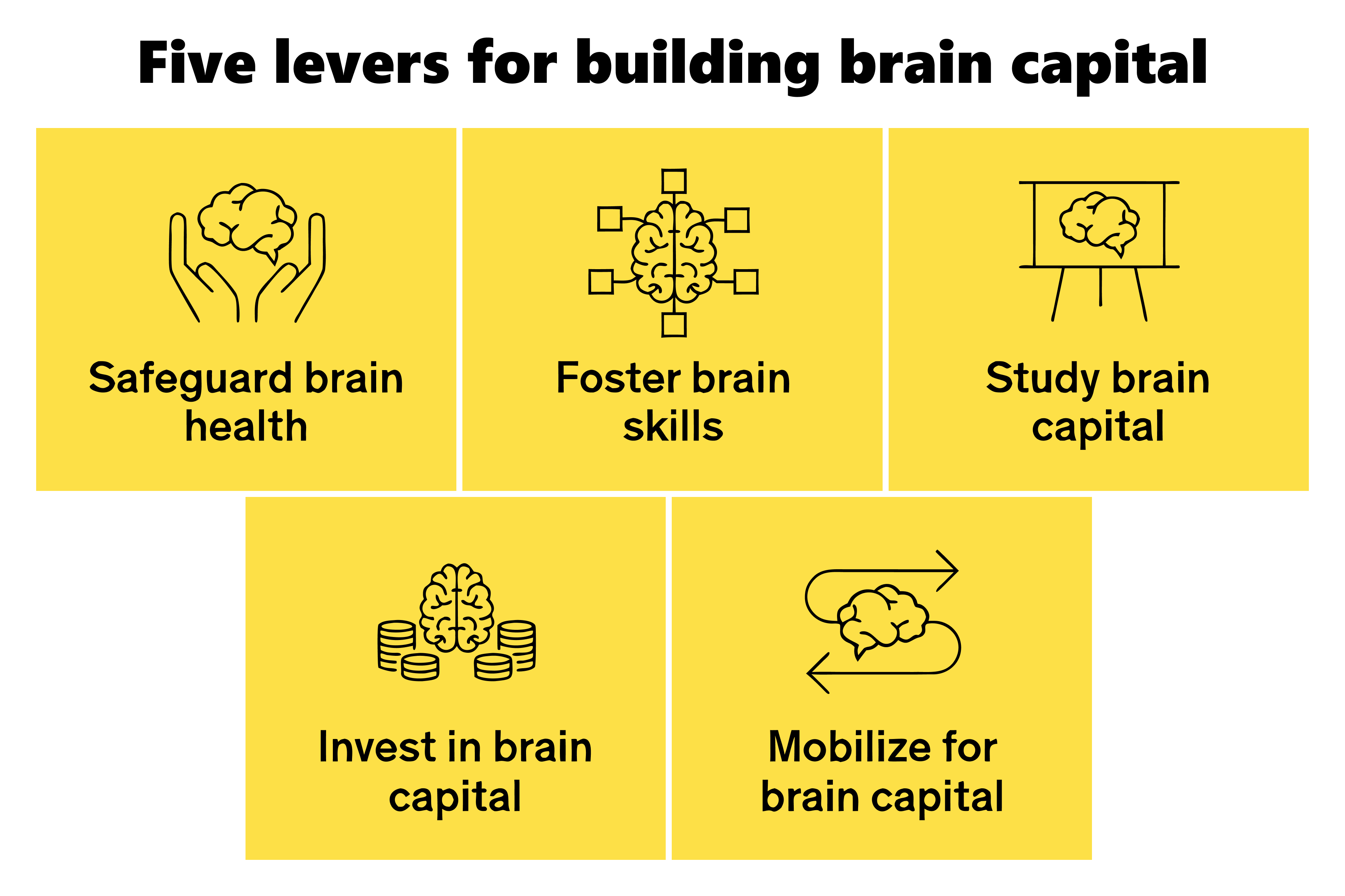
Together, these five levers support each other, building a solid foundation for both individual growth and broader societal progress.
Focusing on them consistently helps build the kind of thinking that powers the brain economy, where human capability (not just output) drives resilience, innovation, and prosperity.
Why the Brain Economy Can't Wait
The change is already happening. As AI takes over more tasks, just having information isn’t enough.
The real advantage comes from being able to understand it, make good decisions, and handle situations where there’s no obvious answer.
At the same time, our brains are under more pressure than ever. Fast changes, uncertainty, and heavier mental demands make it harder to think clearly without effort.
That’s why investing in brain capital is not optional. Building our thinking skills helps not only ourselves but also the teams, organizations, and communities we are part of.
We are not saving lives. Just your insights.
FAQs 🧐
What is brain capital?
Brain capital is the combination of brain health (mental well-being, focus, flexibility) and brain skills (critical thinking, learning, adaptability, communication, decision-making). Together, they determine how effectively we think, learn, and create value.
Why is brain capital important in the age of AI?
As AI handles routine tasks and generates instant answers, human thinking becomes the key advantage. Strong brain capital enables better decisions, innovation, and adaptability in complex, unpredictable situations.
What is the brain economy?
A brain economy puts the brain at the center of growth. It values human thinking, learning, and adaptability as the main drivers of productivity, collaboration, and societal progress.
How can individuals strengthen brain capital?
Focus on the five levers:
1. Safeguard brain health, 2. Foster brain skills, 3. Study brain capital, 4. Invest in brain capital, 5. Mobilize for brain capital through supportive environments.
Why act now?
The brain economy is already taking shape. Rapid technological change and cognitive demands make investing in brain capital essential for personal, organizational, and economic success.


![The Best Reddit Threads Disappear in a Week. Here's How to Keep Them [2026]](https://storage.ghost.io/c/9f/9d/9f9d32ee-55b4-4411-b435-9dc854e1751c/content/images/size/w600/format/webp/2026/06/reddit-cover.png)

![Read it later system for LinkedIn posts - Save, organize, and use what you find [2026]](https://storage.ghost.io/c/9f/9d/9f9d32ee-55b4-4411-b435-9dc854e1751c/content/images/size/w600/format/webp/2026/06/blog-3.png)


