



Knowledge is one of the most valuable assets any organization has. But without a structured approach, knowledge easily gets lost, trapped in silos, or buried in outdated systems.
That’s where knowledge management (KM) comes to the rescue.
In this guide, we’ll break down the key components of knowledge management, the elements of a knowledge management system, and why knowledge management governance is essential for long-term success.
What Is Knowledge Management?
Knowledge management (KM) is the process of creating, capturing, organizing, sharing, and utilizing knowledge to improve decision-making, performance, and innovation across an organization.
In this guide, we’ll break down the key components of knowledge management, the elements of a knowledge management system, and why knowledge management governance is essential for long-term success.
Key Components of Knowledge Management
The essential components of effective knowledge management include content, people, technology, processes, governance, metrics, and culture.
These seven components ensure that the right knowledge reaches the right people at the right time.
- People: Employees, leaders, and stakeholders who create and share knowledge.
- Content: The information, documents, and insights that need to be stored and shared.
- Technology: Tools and systems that enable knowledge capture, storage, and collaboration.
- Processes: Workflows that define how knowledge is created, approved, and shared.
- Governance: Standards, rules, and oversight that keep KM structured and consistent.
- Metrics: Ways to measure the success and impact of KM efforts.
- Culture: A knowledge-sharing mindset that encourages openness and collaboration.
What Are the Components of a Knowledge Management System
While KM components focus on people and principles, a knowledge management system (KMS) provides the technology and structure to put KM into practice.
A strong KMS includes:
- Centralized repositories for documents, notes, and insights
- Search and taxonomy features to make information easy to find
- Access control and permissions for security and confidentiality
- Collaboration tools for real-time knowledge sharing
- Integration with daily workflows so employees can use knowledge effortlessly
👉 For example, Cluing functions as a KMS by allowing teams to save snippets from web pages, PDFs, and videos, add comments, tag content, and share everything from one place.
Key Stages of Knowledge Management Process
Some organizations also refer to the elements of knowledge management as the building blocks of a KM strategy.
These overlap with the components but emphasize different aspects:
- Knowledge creation: Developing new ideas and insights through research, collaboration, and experience
- Knowledge capture: Collecting and documenting useful insights from various sources (whether from employees, documents, or external sources)
- Knowledge organization: Structuring and sorting information with tags and categories, so it’s easy to find and use
- Knowledge sharing: Making the knowledge available to everyone who needs it, through training or knowledge bases
- Knowledge utilization: Applying knowledge to improve decisions, processes and outcomes
- Knowledge review: Regularly checking and updating knowledge to keep it accurate and relevant
- Knowledge retention: Ensuring important knowledge is preserved, even when employees leave the company
Following these stages ensures knowledge stays dynamic and valuable.
 Gordana Laskovic
Knowledge Management - Vision and Strategy
A knowledge management vision defines your long-term goals and aligns KM with business strategy.
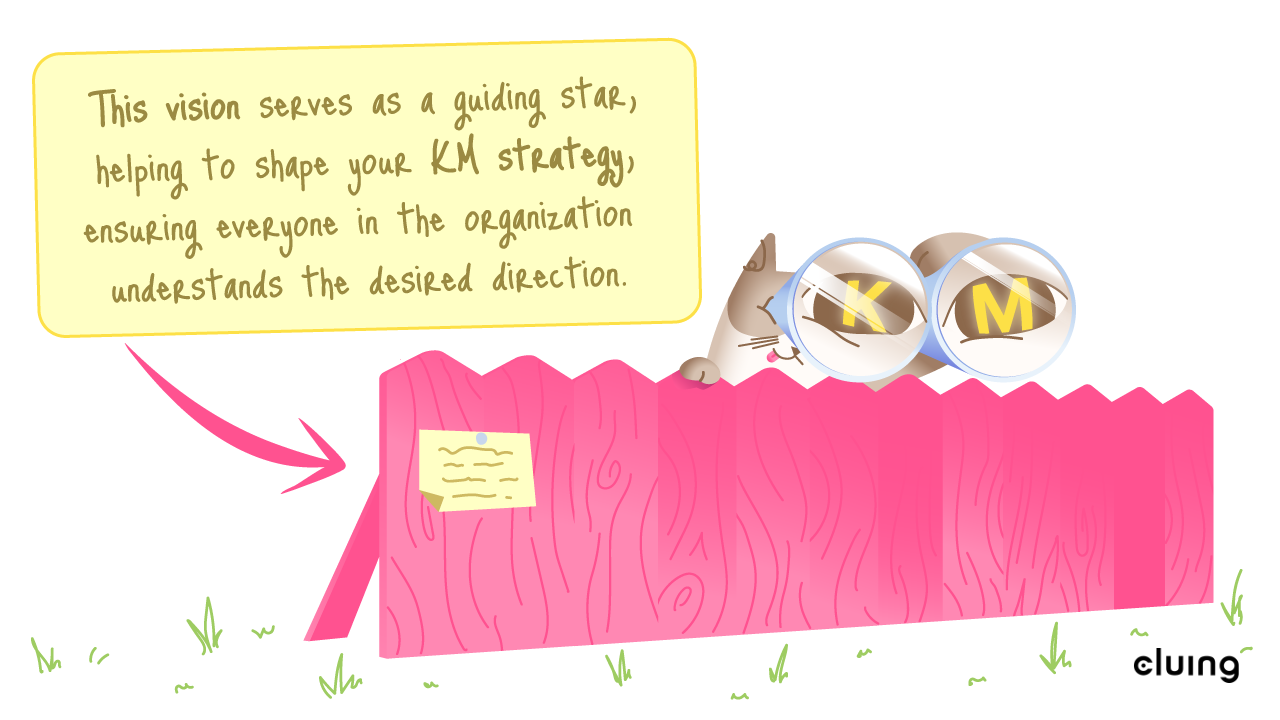
This vision serves as a guiding star, helping to shape your KM strategy and ensuring everyone in the organization understands the desired direction.
When outlining your strategy, specify what it will include and exclude. This clarity ensures everyone knows what to expect and helps maintain focus.
What: The scope defines what's included (and excluded).
How: The principles outline the steps and rules to get there.
To build your KM strategy:
- Assess your current state
- Define your ideal future state
- Map the steps needed for each component
Knowledge Management Governance
Knowledge management governance is the framework of roles, rules, and oversight that keeps KM structured, aligned, and effective.
Why is governance important?
- Maintains consistency across the organization
- Defines responsibilities and ownership
- Ensures leadership support
- Sets standards and policies for knowledge use
- Provides metrics and accountability
Many companies also establish a Knowledge Management Center of Excellence to share best practices and monitor results.
Benefits of Knowledge Management
Why should companies invest in KM? Because it directly impacts performance:
- Faster, more informed decision-making
- Improved productivity (less time wasted searching for information)
- Stronger innovation and collaboration
- Reduced knowledge loss when staff leave
- Better employee engagement and retention
In 2023, Gartner reported 47% of digital employees are unable to access the information they need to perform their tasks, and the situation has worsened.
According to McKinsey, knowledge workers allocate about 20% of their work week to looking for information that should be easily accessible within the organization. A 2024 survey by Gartner reported 84% of employees face significant “collaboration drag,” which is the friction that occurs when information is dispersed across numerous tools and is held by multiple teams.
Key Components of Knowledge Management - Each Explained
The essential components of KM (also called pillars or foundations) are:
- People
- Content
- Technology
- Processes
- Governance
- Metrics
- Culture
People
People are the most important part of your strategy - without their engagement, your efforts will struggle.
To make your knowledge management system effective, it's important to understand your team and to consider following questions:
- Who are your users? What are their demographics, roles, and the business units they belong to?
- What information do they need daily?
- How do they currently communicate and interact? What changes would they like to see?
- Do your employees enjoy sharing their expertise? If not, what are the reasons?
- Are there any thought leaders within your organization? If not, what’s holding them back?
- Are there any informational or functional silos? If so, what caused them?
Senior leaders: These are the business leaders who can champion the KM program and connect it to the organization’s overall strategy. Their active involvement is crucial, especially if they face urgent knowledge gaps, like retiring experts or new hires needing quick onboarding.
Cross-functional stakeholders: These are colleagues from various departments who will help guide the implementation of the KM program.
Content
Content is often the most time-consuming aspect of your knowledge management strategy, but it’s also the most important.
You’ve probably heard the phrase Content is king, and it definitely applies to knowledge management.
Here’s what you should focus on:
- Identify, analyze, and prioritize: Start by determining what content you need, assessing its importance, and prioritizing what matters most.
- Set standards: Agree on the guidelines for creating and managing content to ensure consistency.
- Define taxonomy: Create a clear structure for organizing your content, making it easy to find.
- Create and curate: Develop and manage content that meets the needs of your users and customers, and make sure to keep it updated and relevant over time.
When assessing your content, think about these questions:
- Where is your content stored? How is it organized and accessed? Are access controls in place? Do you have any security or confidentiality concerns to address?
- Is your content up-to-date? If not, what challenges are you facing in keeping it fresh?
- Do your staff trust the content they find on internal systems?
- Are teams collaborating when creating new content? If needed, is there a review and approval process in place?
- What are your current knowledge retention practices? For example, what happens when staff leave or change roles?
- Do you need to collaborate or share content with external stakeholders?
- Are you using tags and formatting to improve content accessibility?
 Gordana Laskovic
Technology
Knowledge management isn’t just about IT; it’s about using technology to support and improve your KM efforts.
First, identify what you need from technology to achieve your KM goals. Take stock of the tools and systems you already have that help users access, create, and manage knowledge.
Get input from your technical team to ensure your strategy aligns with their plans. If necessary, consult with current or potential vendors to see how their solutions can meet your needs.
Staying up-to-date is also important, so consider attending industry events and joining KM forums to keep current with the latest trends and tools.
Processes
Analyze your current processes to see what's effective and what needs improvement.
It’s often more efficient to integrate KM practices into existing workflows rather than starting from scratch.
Some examples of processes to consider include:
➡️ Content management: How is content created, managed, and maintained from start to finish?
➡️ Content sources: Where does new content come from?
➡️ Collection and storage: How is content collected and stored?
➡️ Review and approval: What’s the process for reviewing and approving content?
➡️ Content sharing: How is content shared with users?
➡️ User feedback: Is there a way for users to provide feedback on the content?
➡️ User training: How are users trained to use knowledge effectively?
➡️ Content updates: How do users learn about new or updated content?
➡️ Knowledge distribution: How is knowledge shared across the team?
➡️ Content maintenance: What process is in place for updating, improving, or removing outdated content?
➡️ User engagement: What activities keep users engaged with the KM system?
➡️ KM team support: How is the KM team trained and supported in their roles?
➡️ Onboarding new members: How do you introduce new team members to the KM culture?
➡️ Measuring effectiveness: How do you measure the effectiveness of your KM practices?
➡️ Supporting tools: What tools and resources are available to support your KM efforts?
With these questions in mind, you'll be well-equipped to develop a comprehensive KM strategy that effectively addresses your organization’s needs.
Governance
Governance is an essential step for keeping your knowledge management strategy on track and ensuring it delivers the results you want.
To stay aligned with your goals, establish a steering committee made up of key stakeholders. This committee will make important decisions and monitor the strategy's effectiveness. Regular involvement from senior stakeholders is essential for maintaining their support.
Also, consider creating a knowledge management center of excellence within your organization. This center can help share best practices and keep everyone updated on the latest trends in content, technology, and business processes.
Metrics and benefits
Metrics allows KM to transition from a system of faith to one of control. Start by identifying three to five numbers that you will instrument from day one. It is less about the numbers themselves and more about providing an initial starting point for determining if your system is moving in the right direction.
The four categories that matter:
1) Adoption metrics - is anyone actually using this?
- Monthly active contributors (people who created or edited an item in the last 30 days)
- Monthly active consumers (people who opened at least one item)
- Contribution rate (contributors divided by total headcount)
- Coverage (percent of the topics your team asks about that have at least one KB entry)
2) Findability metrics - when they look, do they find?
- Search success rate (percent of searches that end in a click, not another search)
- Zero-result rate (percent of searches returning no matches — high means coverage gap or bad tagging)
- Time-to-answer (median seconds from search to item opened to question resolved)
3) Freshness metrics - is the content still true?
- Content-freshness rate (percent of items reviewed in the last N days, where N is defined per content type - a compliance policy might be 90 days, a project retro might be 730)
- Stale-item rate (percent of items past their review deadline)
- Broken-link rate (percent of items containing a URL that no longer resolves)
4) Impact metrics - is this changing outcomes?
- Ticket deflection (percent of support tickets solved by a self-serve KB article)
- Onboarding time-to-productivity (weeks to first solo customer call, first shipped PR, etc. - compare to baseline before KM)
- Repeat-work rate (surveys asking teams how often they redo work someone else has done)
Pick one from each category. Publish the numbers monthly in a channel the whole team sees. That's it - the ritual matters more than any specific metric.
Culture
Culture is the component that can't be bought. You can install a KMS in a week; you can't install the willingness to share what you know in a week. The good news is you can measure and shift it, slowly.
Signs of a knowledge-hoarding culture:
- The same 2–3 people keep getting Slack DMs with the same questions
- "Ask X" is the answer to too many things — X is a person, not a doc
- Documentation exists but is 18+ months old
- New hires spend their first month trying to find things instead of doing things
- When someone leaves, their team loses information for weeks
If two or more of these hit home, you might be dealing with a hoarding problem and it’s usually not because you’re trying to keep things to yourself. It’s because being the person with the answers feels more valuable than taking the time to document everything.
What actually shifts it:
- Make sharing visible. In every retro, ask "what did we learn this cycle and where does it live?" - and share the answer to the whole company, not just the team.
- Reward contribution, not gatekeeping. Add "knowledge shared" to performance reviews. Feature the top monthly contributors in a Slack channel. Small signals compound.
- Set an "author expectation," not a "reader expectation." Most KM strategies fail because they require everyone to read the docs. Successful ones require senior staff to write them. Flip the pressure.
- Run "office hours" for docs, not questions. Instead of a weekly Q&A where the answer disappears, make it a weekly documentation session where questions get turned into permanent entries.
For a deeper playbook on the specific case of knowledge hoarding, see our post on smart strategies to prevent knowledge hoarding.
Why Your Team Needs a Knowledge Management Strategy
Investing in a structured KM strategy ensures your team spends less time searching for information and more time using it.
Employees can make informed decisions quickly, collaborate efficiently, and generate innovative solutions.
A strong KM framework also captures institutional knowledge, reinforces best practices, and creates a culture where knowledge sharing drives both individual and organizational growth.
Ready to invest in your team's knowledge?
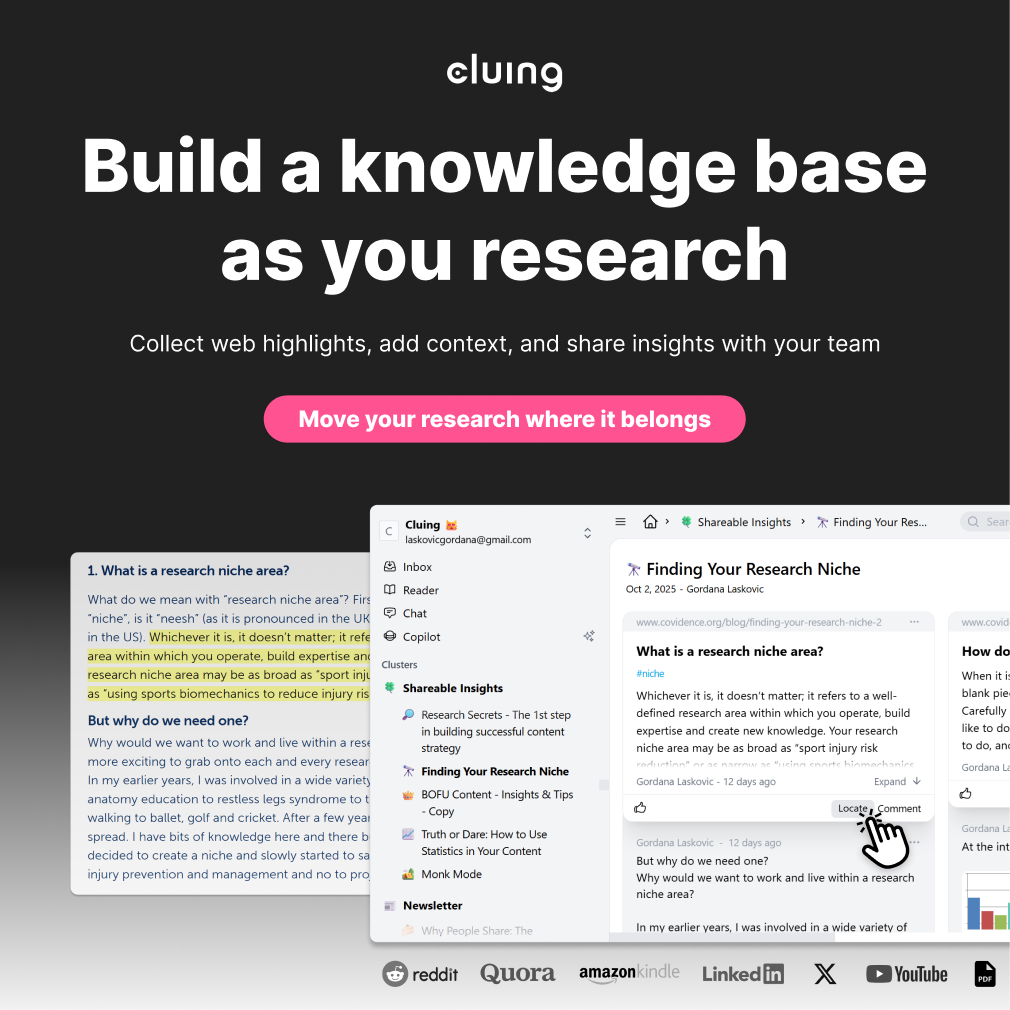
Cluing - Turn Your Team's Knowledge into a Living System
Cluing lets your team collect snippets from web pages, PDFs, and videos, add comments and tags, and turn scattered knowledge into a dynamic, shareable system.
Centralize insights, improve collaboration, and make smarter decisions - without losing context.
FAQ
What are the essential components of effective knowledge management?
Content, people, technology, processes, governance, metrics, and culture.
Why are people important in knowledge management?
People create, share, and use knowledge, bridging knowledge gaps.
What role does technology have in knowledge management?
Provides tools to create, store, share, and collaborate on knowledge.
What processes are involved in knowledge management?
Creating, capturing, organizing, sharing, utilizing, reviewing, and retaining knowledge.
What are the key stages in the knowledge management process?
Creation, capture, organization, sharing, utilization, review, and retention.
Why does your team need a knowledge management strategy?
To access and share information easily, foster innovation, and improve productivity.
Why is governance important in knowledge management?
Because it ensures consistency, accountability, leadership involvement, and measurable results.


![The Best Reddit Threads Disappear in a Week. Here's How to Keep Them [2026]](https://storage.ghost.io/c/9f/9d/9f9d32ee-55b4-4411-b435-9dc854e1751c/content/images/size/w600/format/webp/2026/06/reddit-cover.png)

![Read it later system for LinkedIn posts - Save, organize, and use what you find [2026]](https://storage.ghost.io/c/9f/9d/9f9d32ee-55b4-4411-b435-9dc854e1751c/content/images/size/w600/format/webp/2026/06/blog-3.png)


